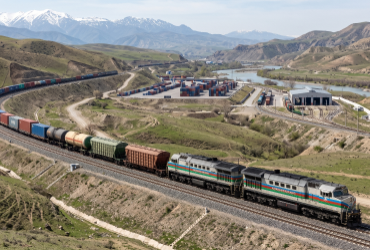


According to the most recent official figures from the State Statistics Committee of Azerbaijan, the volume of goods transported by rail rose from 13.95 million tons to 18.73 million tons over a five-year span, with transit traffic accounting for 40% of that total. Petroleum, chemical and agricultural products remain the backbone of what moves along the country's rail lines, and the average shipment travels 379 kilometers from origin to destination.
The growth is happening despite real constraints. Azerbaijan's 2,476-km rail network, of which 1,157 km is electrified, has been under-maintained since independence in 1991, and the average commercial speed of freight trains has fallen to just 27 km/hour. The state-owned Azerbaijan Railways (ADY) remains the sole operator of both passenger and freight services, owning nearly all rail infrastructure in the country outside a handful of industrial lines like ours.
Azerbaijan's importance as a transit route from Asia to Europe has increased, especially following the imposition of Western sanctions on Russia
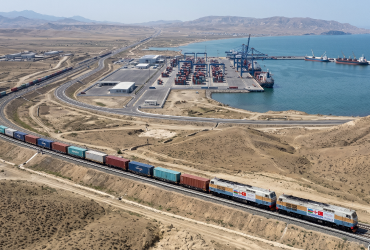
The completion of the Baku-Tbilisi-Kars railway and the Alat Port has been a major driver of this shift, positioning Azerbaijan as a key link in trade between East, Central and South Asia and Europe. Globally, the rail freight transport market is projected to grow from USD399 billion in 2024 to USD510 billion by 2029, a CAGR of 5.04%, and Azerbaijan's transit growth is part of that broader story.
What this means for our operations
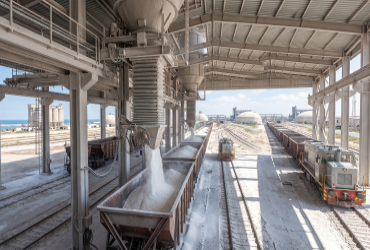
As a company that leases dedicated railroad infrastructure connecting an industrial plant to the ADY network, we sit at the intersection of this trend. Rising national freight volumes and growing transit demand reinforce the case for well-maintained, reliable rail links like the one we operate between the carbamide plant and Haji Zeynalabdin station.
A cleaner alternative to road transport
With a global push to reduce carbon emissions, highlighted by Azerbaijan's hosting of COP29, rail's efficiency advantage over road haulage for long-distance bulk cargo is becoming an increasingly important part of the country's transportation strategy, one our bulk bunker and railroad lease services are built to support.